Castilian nation houses
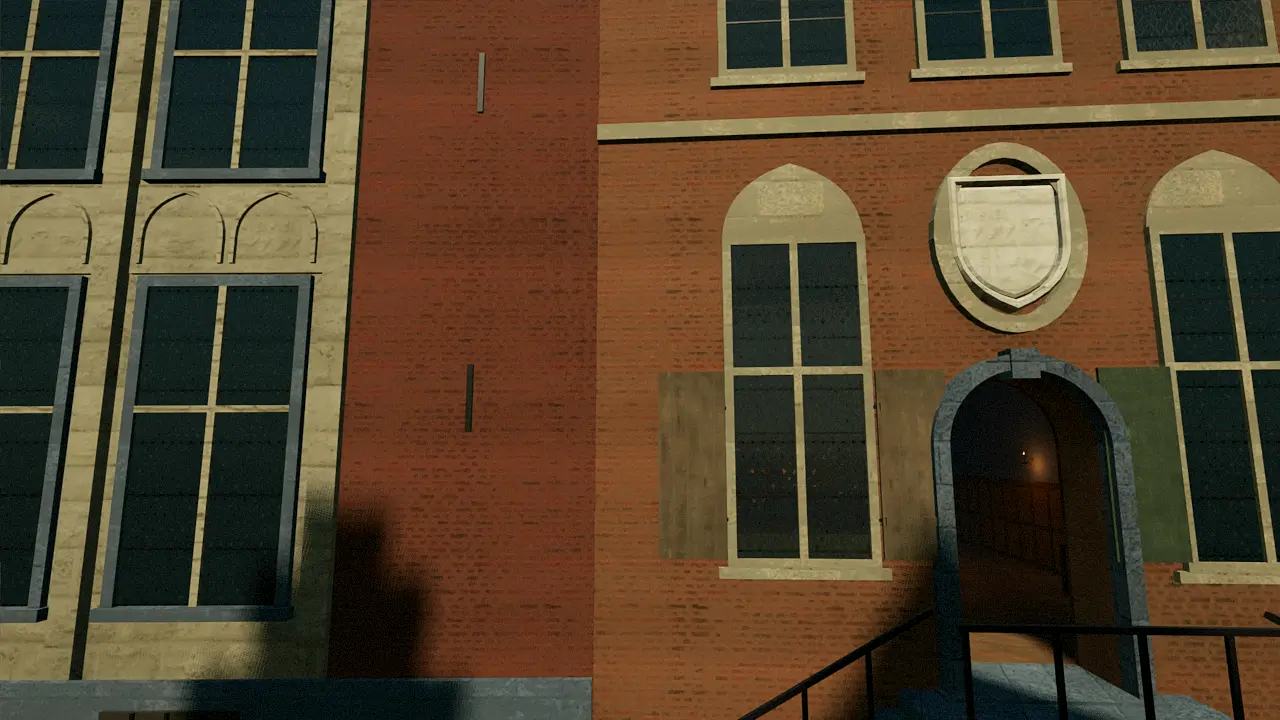
The gate, Huis de la Torre and, beside it, the taller house of the Castilian merchants with corner turrets and an outside stair.
In 1562
The gate, Huis de la Torre and, beside it, the taller house of the Castilian merchants with corner turrets and an outside stair. Whether the nation itself met here or in the Casa Negra up the street, the sources do not agree.
Its history
Castilian merchants settled in this street at the end of the 15th century and gave it its name. Huis de la Torre is a 13th-century deep house that got its crenellated sandstone front about 1500 and its Renaissance gate in the mid-16th century.
Today
Huis de la Torre's front still stands, restored in 1975; its gate was moved twice and now stands south of it. The Castilian house and the Casa Negra are gone.
Walk to it
In Bruges 1562 this building stands where it stood, among the streets and canals of its time. You walk there at eye level in your browser, free, on a computer with Chrome or Edge. Read how a virtual walk through Bruges works.
Nearby
Sources
- Onroerend Erfgoed, Huis de la Torre (29745)
- Onroerend Erfgoed, Spanjaardstraat (theme 4313)
- Antonius Sanderus, Flandria Illustrata (1641): Praetorium Domini de la Torre and Domus Negotiatorum Castellanorum Brugae (via Ghent University)
- Marcus Gerards, plan of Bruges (1562), atlas boxes 9080 5380 480 380 and 9250 5480 300 260
- Ricardalovesmonuments, Spanjaardstraat 16 Brügge (2022, CC BY-SA 4.0)
- Ricardalovesmonuments, Spanjaardstraat 14 + 16 (Tor) Brügge (CC BY-SA 4.0)

