The houses of the merchant nations
Merchants from all over Europe once kept a house of their own in Bruges. Six of those nation houses stand again in Bruges 1562, as they looked that year.
Foreign merchants in Bruges gathered by origin in nations and the larger ones kept a house in town. By 1562 the best years were over. The Florentines had given up their house around 1525, the Genoese left in 1551 and the Hanse moved its office to Antwerp in 1555. The Castilians and the Biscayans stayed, and the English wool staple came to Bruges in 1558, after Calais fell to the French.
Six houses, then and now
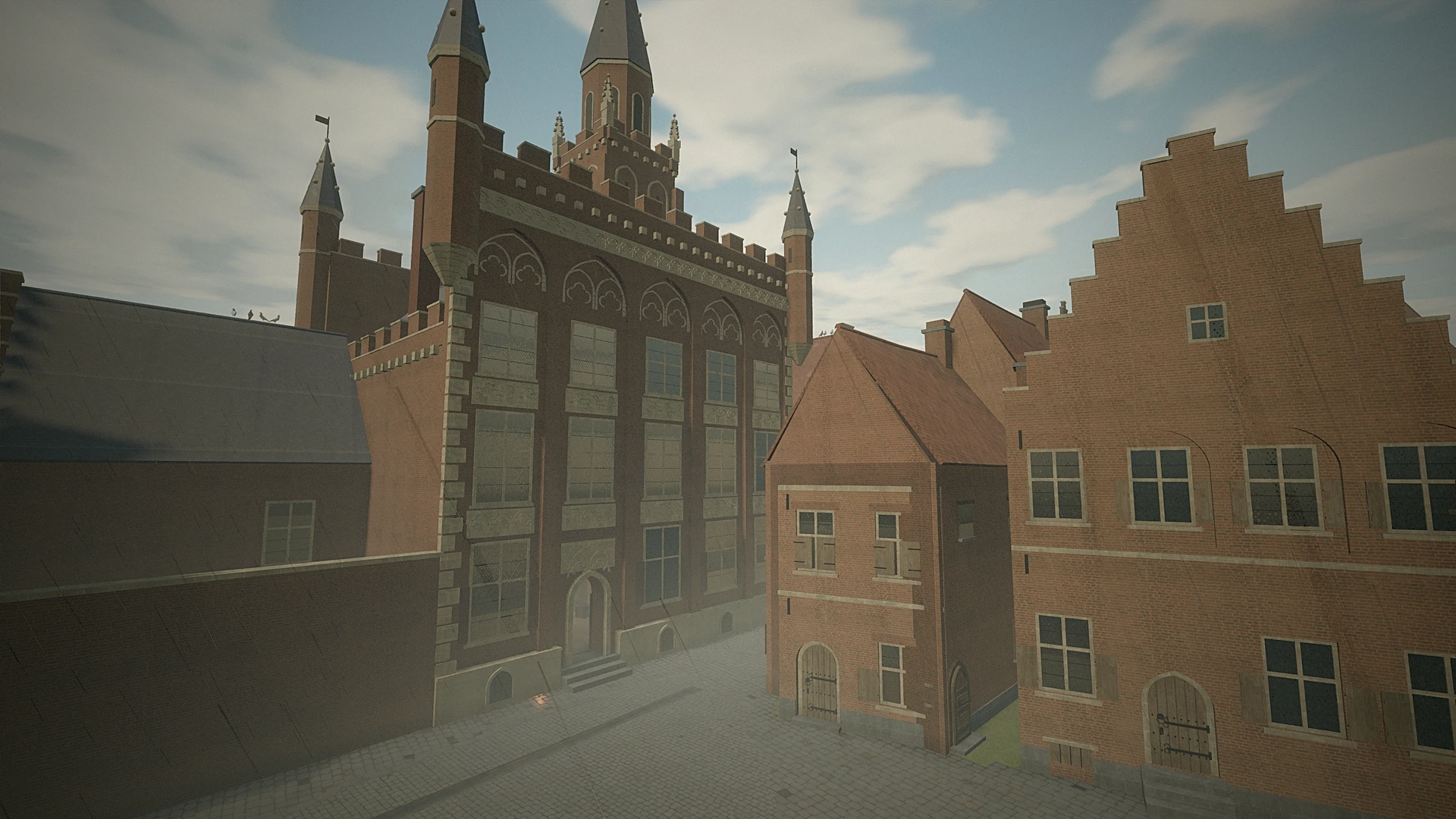
The Hanse merchants, called Oosterlingen, rebuilt their house from 1478 with a tall tower. The tower burned in 1582 and the house was lowered in 1769. That lower house still stands on the Krom Genthof.
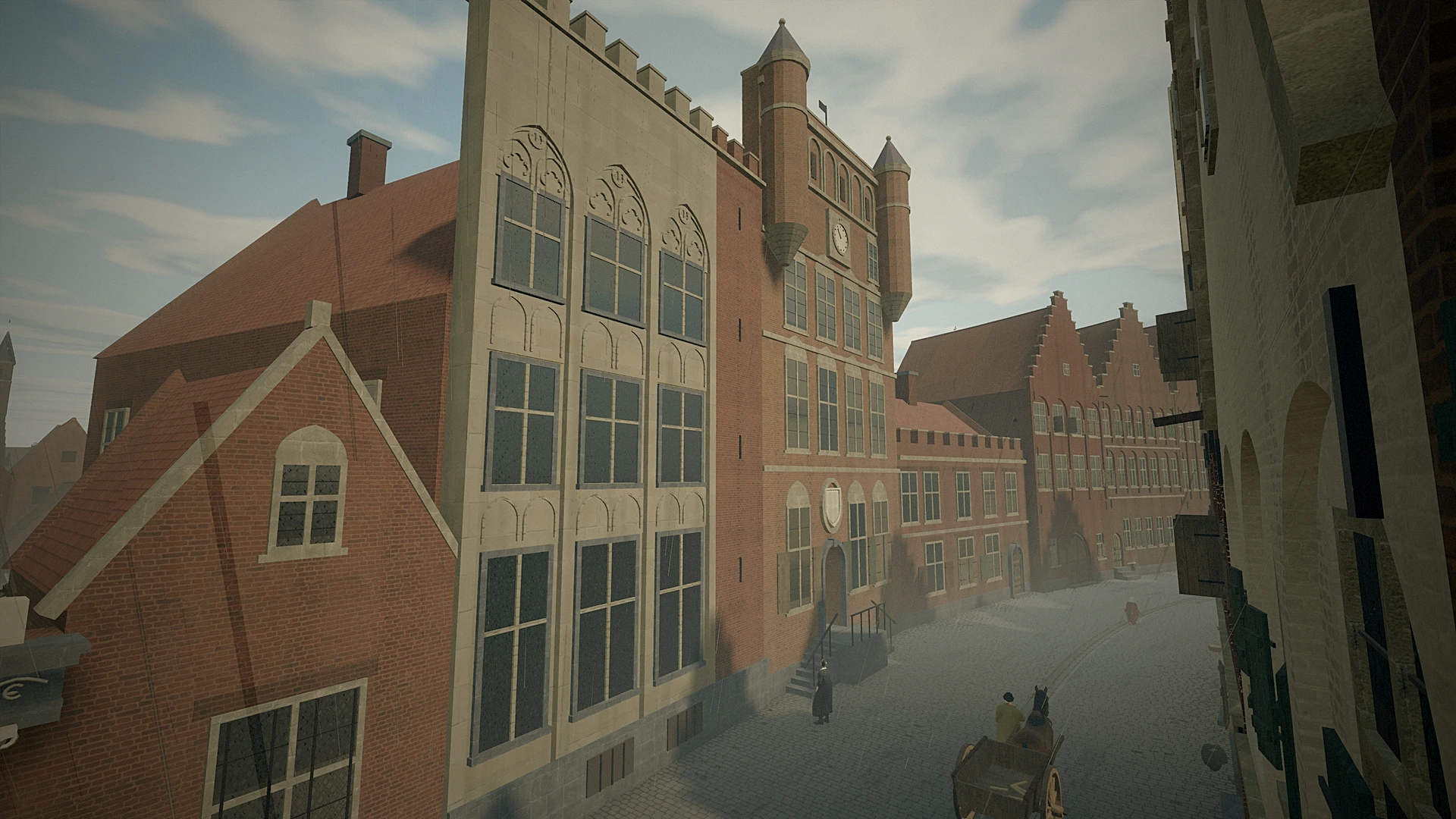
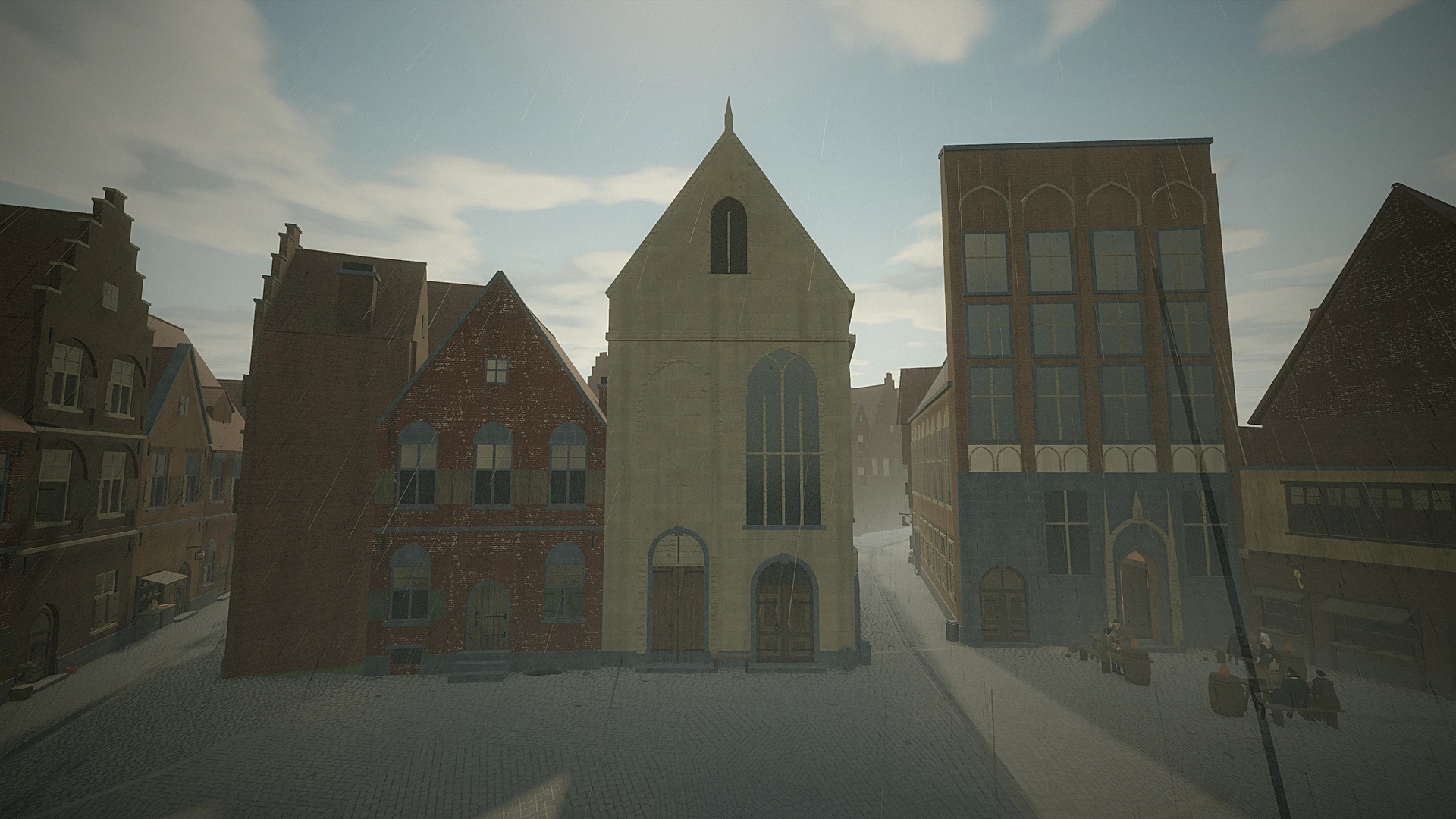
The Castilians gave the Spanjaardstraat its name. From their row the Huis de la Torre still stands, with its sandstone front of about 1500. The taller merchants' house beside it is gone.
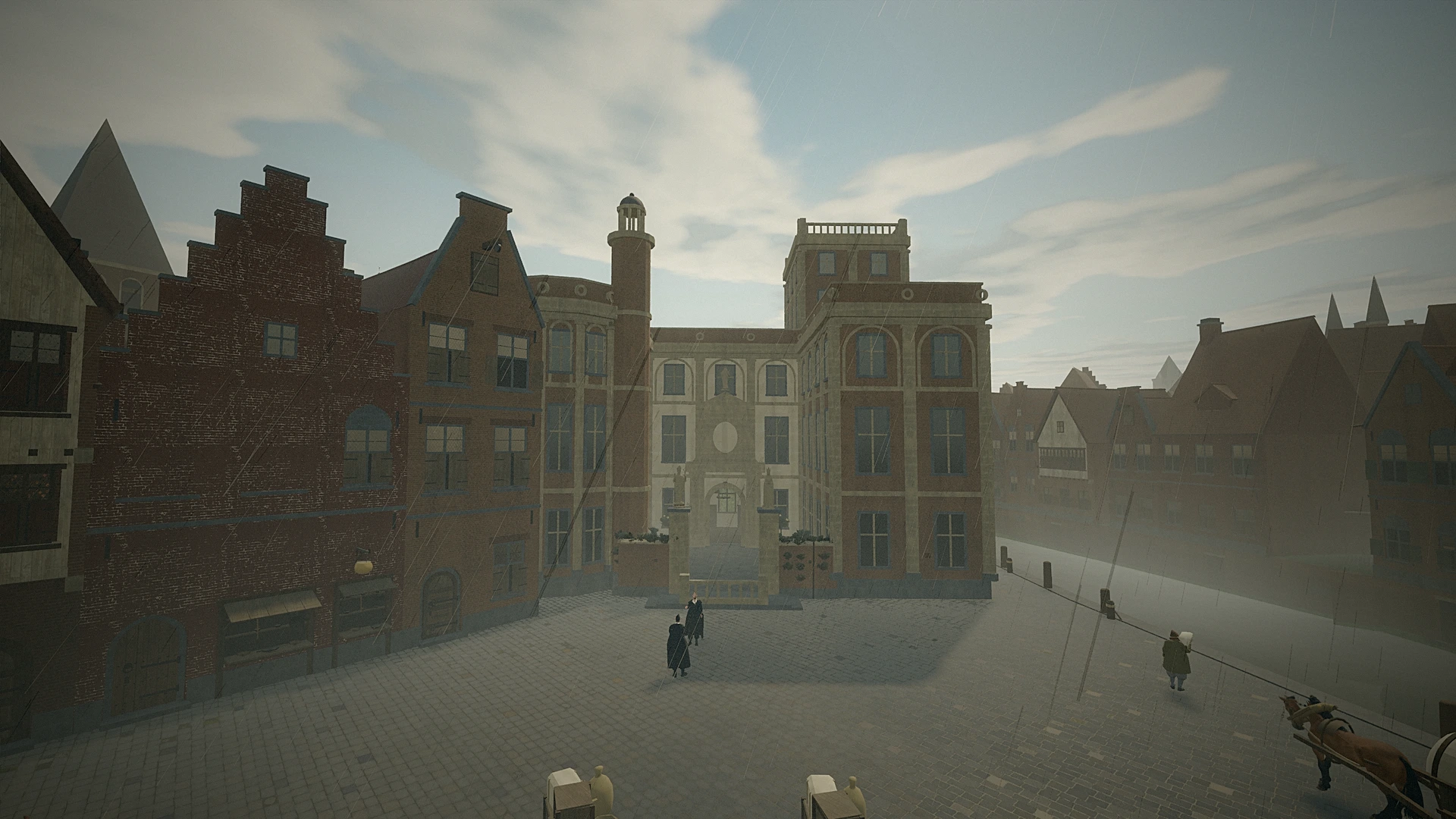
The town bought two houses for the Biscayans in 1494, across the water from the Poortersloge. Their new house had flat roofs “in the Spanish manner”. Most of it was pulled down in 1837, but the square is still called Biskajersplein.
The English house stood on the Spiegelrei from the late 14th century. It was rebuilt from the ground in 1756 and is a school today. Only its cellars are older.
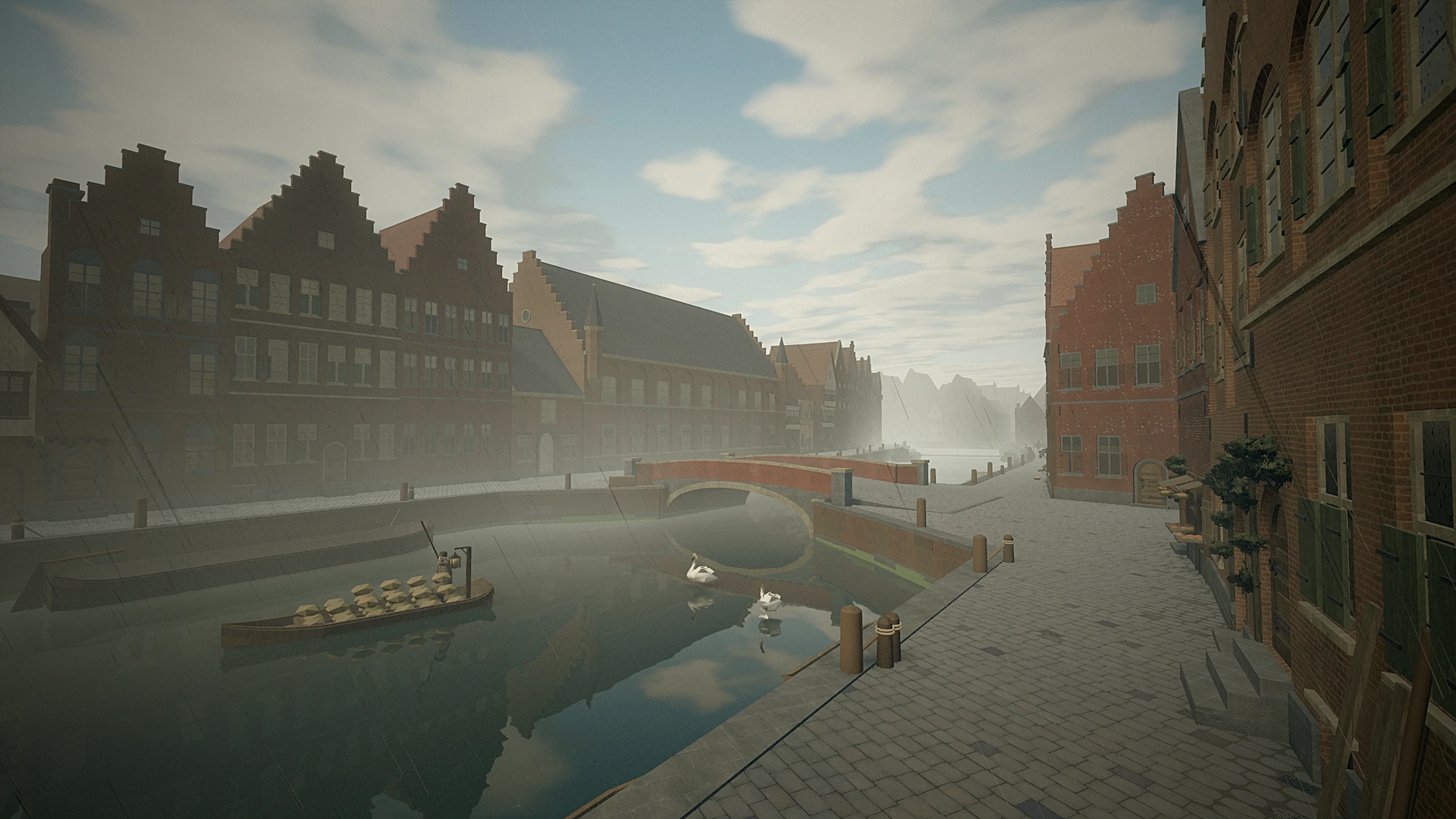
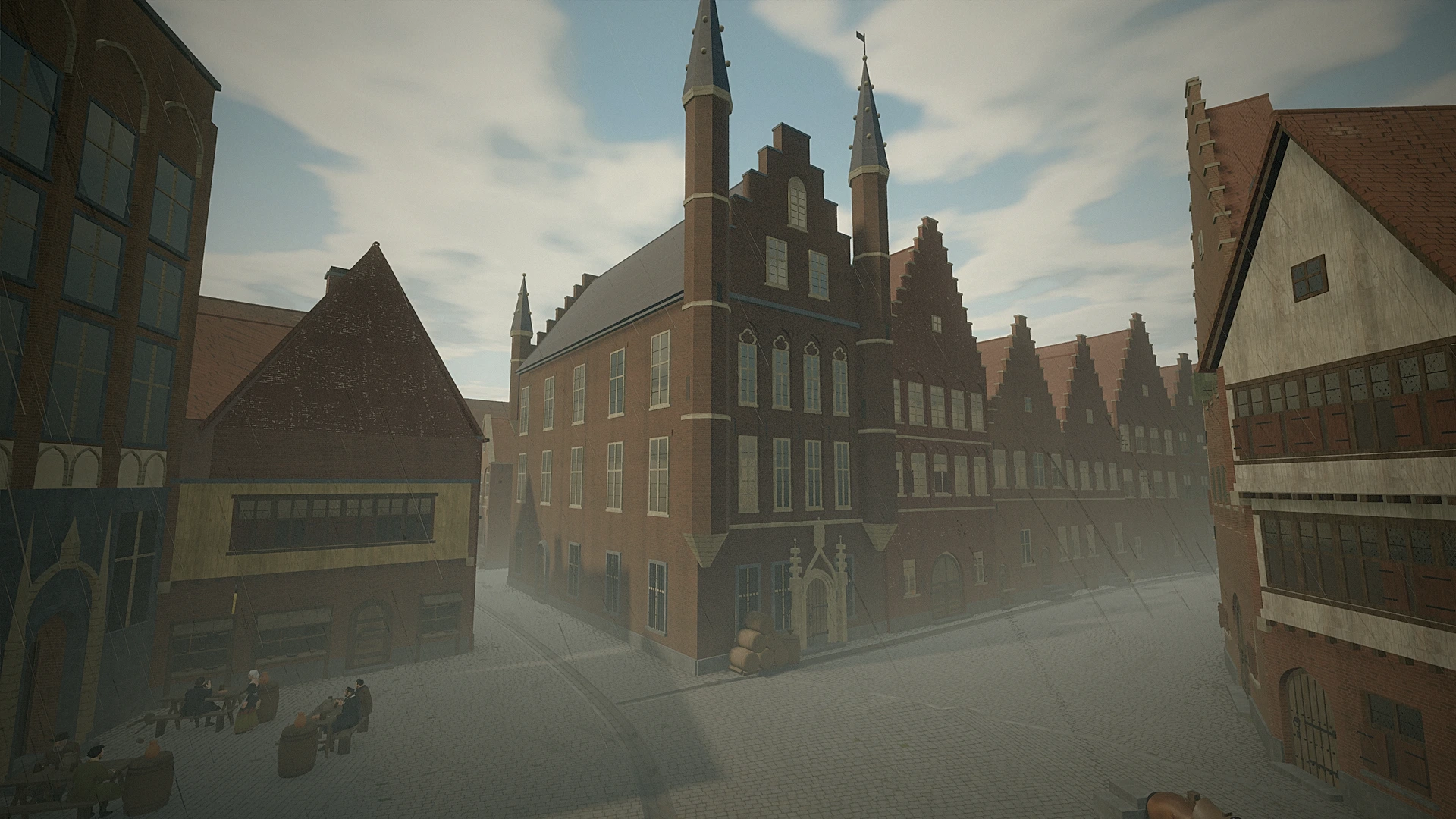
On the Oude Beurs, the Genoese lodge of 1399 stood empty in 1562. Its stone front with Saint George over the door is still there, under a bell gable of about 1720. On the same square, the Florentines' former house had four turrets with spires. Today it has a plastered 18th-century gable over a shopfront.
What it is based on
What survives is measured. What is lost follows Marcus Gerards' map of 1562 and Sanderus' engravings of 1641.
How sure we are
- Documented: where each house stood, the dates, and the surviving fronts of the Genoese lodge, the Huis de la Torre and the Oosterlingenhuis.
- Our best estimate: the heights of what is lost, the Biscayan house, the English house (known from a single engraving) and which house in the Spanjaardstraat was the Castilians' own.
- Invented by us: the furnishing of the rooms you can go into.
Come and see them along the water north of the Markt. If something looks wrong, or you know a source we missed, tell us on the feedback page.